Our Story
Where a knot, a wave and a wooden block become something you wear
Where it began
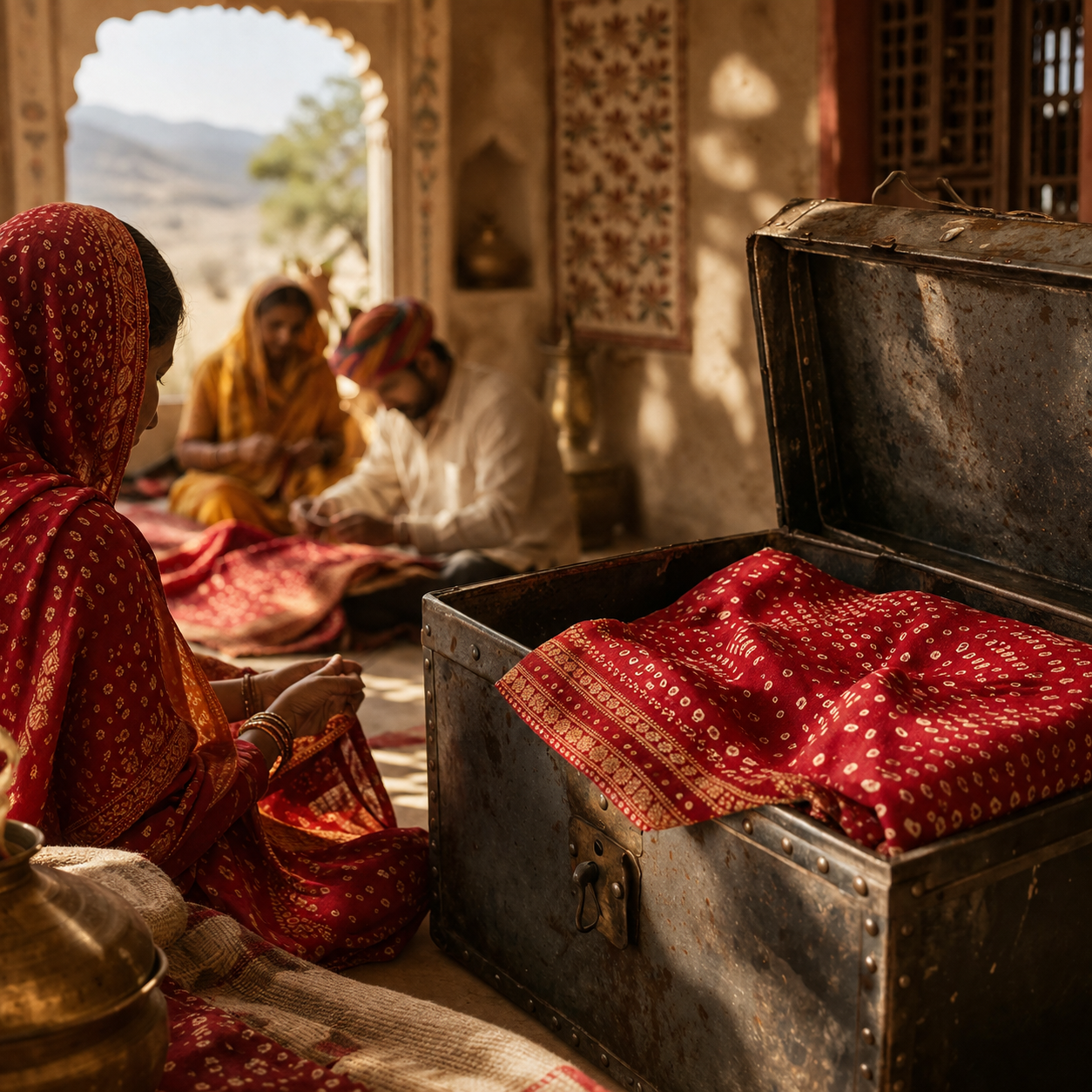
It began with an odhni in a steel trunk
In almost every Rajasthani home there is a trunk, and inside it a bandhani odhni folded away for the good occasions — worn at a wedding, then a first day of school, then a daughter's wedding. It fades a little each decade and somehow becomes more beautiful for it. That is the cloth we grew up around, and the reason Rajasthani Threads exists.
We started with one uncomfortable question. If these crafts are so loved, why were the people making them earning the least, and why was the market filling up with screen-printed copies sold as the real thing? So we skipped the middle entirely. We went to the karigars, learned the difference between a knot tied by hand and a dot stamped by a machine, and started selling only the first kind.
No warehouses of identical stock. No mystery supply chain. Just suits and sarees we can trace back to the hands that made them.
Our crafts
Four traditions, one wardrobe
Every piece we carry belongs to a living Rajasthani craft — each with its own rhythm, its own region, its own way of catching the light.
Bandhani
Thousands of tiny knots tied by fingernail, dyed, then opened to reveal a sky full of dots. A fine saree can take weeks.
Leheriya
The fabric is rolled diagonally and bound before dyeing, so the colour breaks into waves — named for the desert's monsoon longing.
Ajrakh
Hand-carved blocks, natural indigo and madder, and up to sixteen rounds of printing, washing and sun-drying for one length of cloth.
Cotton & Mulmul
Feather-light weaves that breathe through a Rajasthani summer — the everyday luxury of wearing almost nothing at all.
How a piece is made
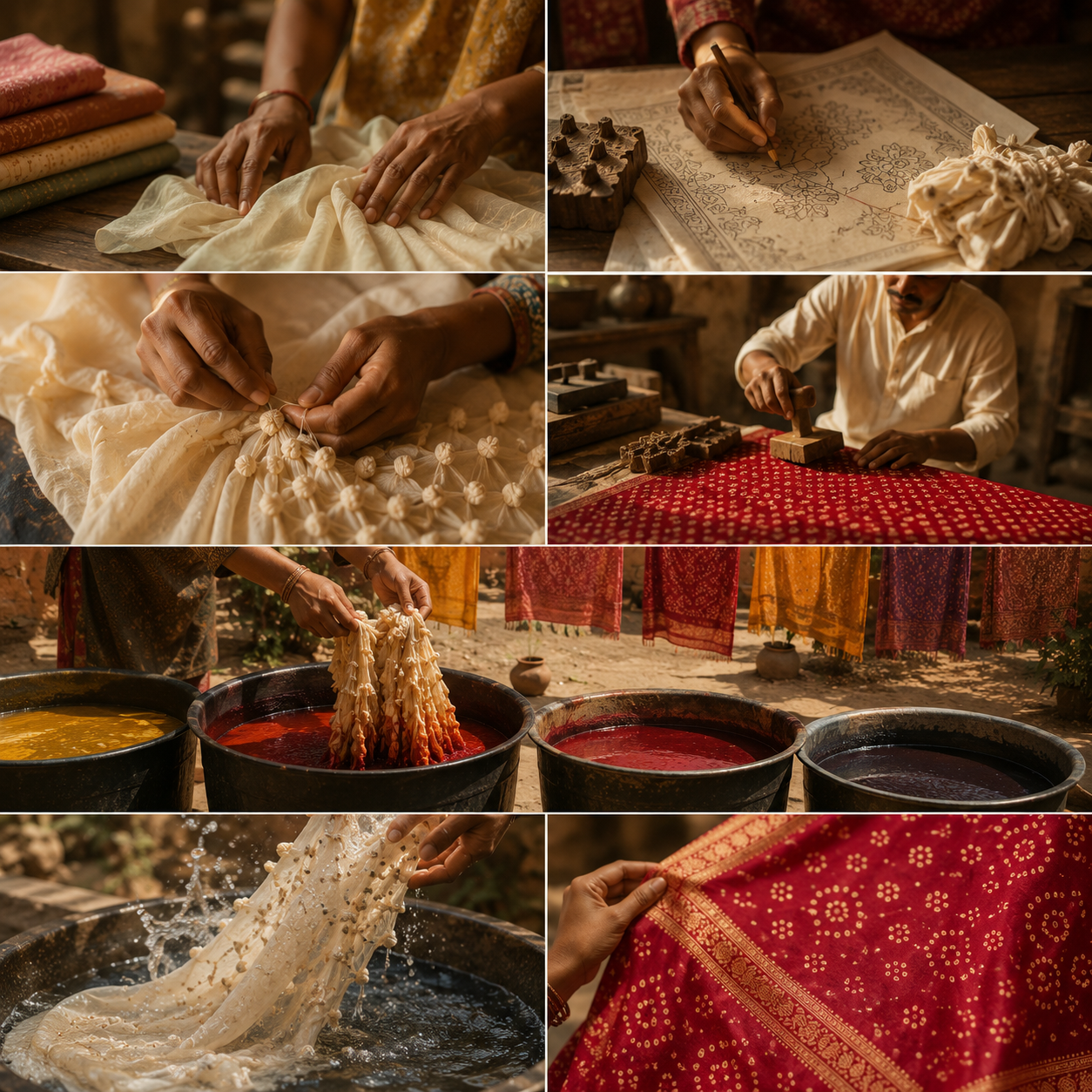
Six weeks, four pairs of hands, one saree
It starts with the fabric — pure cotton, mulmul, georgette, organza or gajji silk, chosen for how it will fall on a body, not for how cheaply it can be bought. Then the design is traced, and the tying begins: knot after knot, or block after block, in a workshop where the loudest sound is a wooden mallet.
The dye vats come next, one colour at a time, lightest first. Between every colour the cloth is washed and dried under an open sky. Only at the very end is the thread pulled away and the pattern seen — by the artisan first, and then by you.
That is why our collections are small and our restocks are slow. We would rather sell you one piece worth keeping than ten worth forgetting.
By the numbers
Craft that creates impact
Our promise
Kind to your skin, fair to the hands behind it
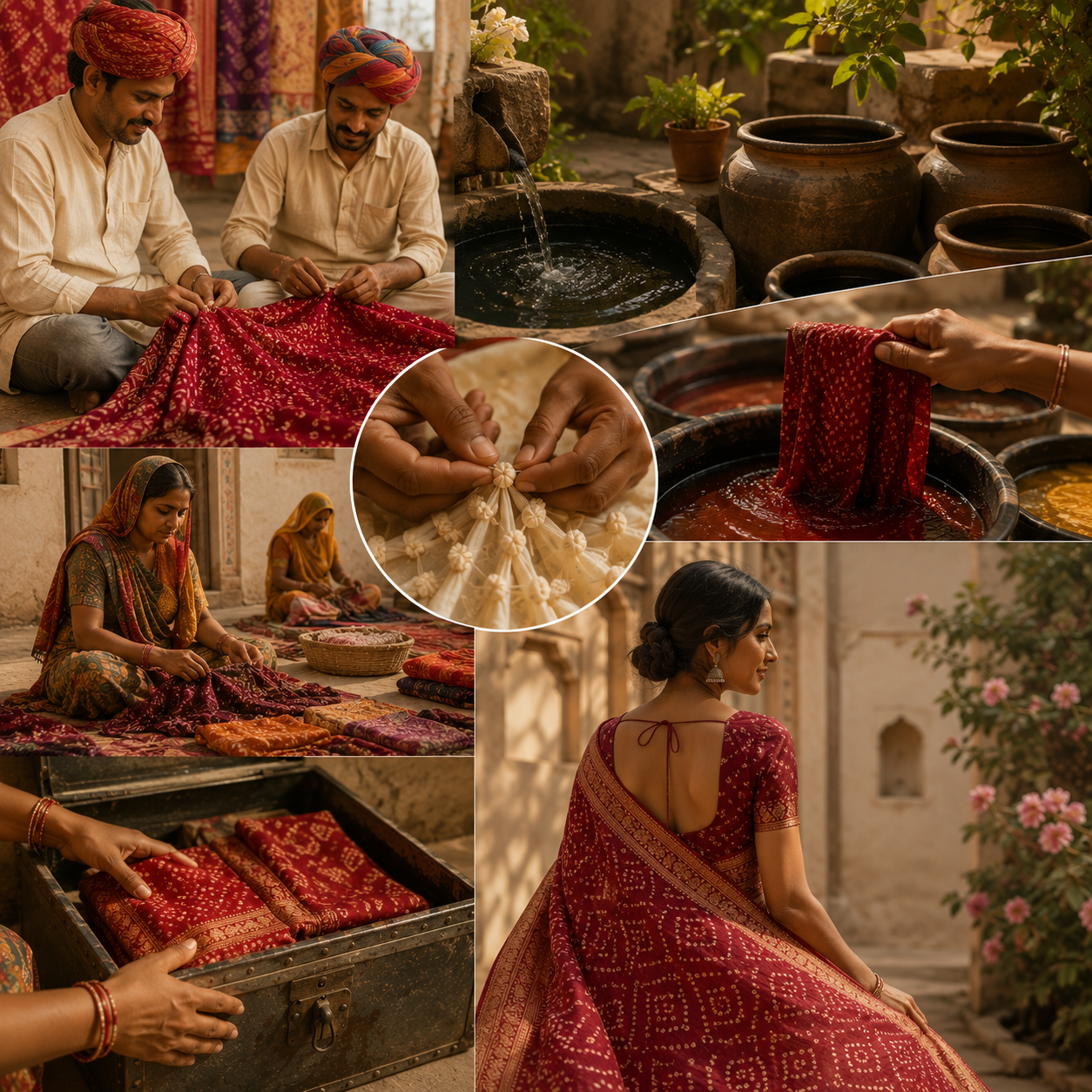
We work with skin-friendly, low-impact dyes and reuse water across the dyeing process. Our artisan partners are paid a fair rate agreed before the work begins, not after — and paid for the whole year, not only in wedding season.
And because everything is made by hand, we promise you the honest kind of perfection: a knot that sits a little differently, a wave that runs a little wider, a colour that deepens beautifully with every wash. Wear it to a mehndi, to work, to your best friend's wedding. Then fold it into your own trunk, and let it start someone else's story.
Shop the Collection